As educators and parents, we have always worried about the influences shaping our children. Today, however, we are confronting something fundamentally different: a generation growing up with smartphones, social media, gaming and algorithms competing continuously for their attention — and soon, another generation growing up with artificial intelligence. But that is for another article.
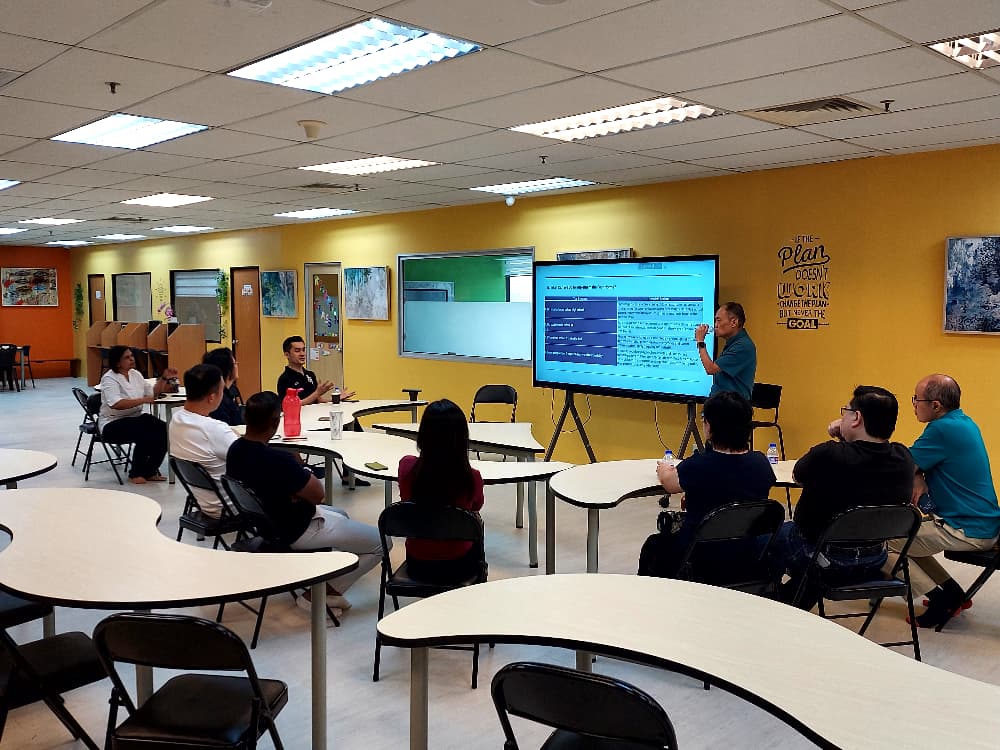
Recently, we invited a group of Cornerstone parents to sit down with our school leadership and counsellor to discuss this challenge. Our conversation was informed by Jonathan Haidt’s The Anxious Generation, which argues that childhood has undergone a profound shift — from a play-based childhood to a phone-based childhood.
The evidence deserves our attention.
The data presented during our discussion showed a sharp increase in major depressive episodes among American teenagers since the early 2010s, particularly among girls. We also looked beyond the United States. A nationally representative South Korean study involving more than 231,000 adolescents aged 12–18 found that 57% were using smartphones for more than four hours a day; such use was associated with higher odds of loneliness, depressed mood and perceived stress.
We are not claiming that smartphones cause every problem our children experience. Our parents rightly reminded us that every child is different. Family circumstances, personality, friendships and adolescence itself all matter. But we cannot ignore what is happening before our eyes.
What are we trying to achieve?
At Cornerstone, we have already taken some significant steps. Our school is substantially phone-free during the school day. Students surrender their phones when they arrive, and younger students generally do not bring phones to school at all. While we encourage our teachers and students to use technology and digital devices in the classroom, they should be used only when they genuinely enhance learning.
But our discussion with parents convinced me that simply taking devices away is not enough.
One question kept coming back to us: If we take away the phone, what are we replacing it with?
At our recent school camp, students were given one hour each day to use their phones. Interestingly, many soon returned them voluntarily because they were having too much fun playing, talking and doing things together.
There is an important lesson here.
The answer to too much screen time is not merely less screen time. It is more real life — more sport, play, reading, music, friendships, conversations, service, responsibility, creativity and opportunities to discover the world beyond a screen.
To that end, we are looking to introduce more non-digital activities during our break times, such as board games, strategy games, table tennis and storytelling sessions in the library.

Where we are going in 2027
Beginning in 2027, we intend to take our digital wellbeing policy further.
We are exploring the implementation of Mobile Device Management (MDM) for students’ personal digital devices. With parental consent, MDM would enable appropriate restrictions on apps, websites and software while allowing controlled access according to agreed times and purposes. If implemented, participation would become part of our conditions of enrolment so that we can maintain a consistent approach across the school community.
But technology cannot solve a problem created partly by technology.
We therefore also intend to introduce a Cornerstone Parent-School Digital Pledge. We will ask parents to stand with us in establishing sensible boundaries. The goal is to work towards the four norms Jonathan Haidt recommends: no smartphones before high school, no social media before 16, phone-free schools from bell to bell, and more independence, free play and real-world responsibility.
This must be a partnership. Parents remain primarily responsible for raising their children; the school cannot and should not replace them. But neither can schools say that what happens outside our gates is none of our concern. Our children move between these two worlds every day.
Ultimately, I do not want Cornerstone students to obey digital rules merely because adults are watching them. I want them eventually to possess something far more valuable: self-control.
Our approach can perhaps be summed up simply:
Protect them when they are young.
Guide them as they grow.
Educate them as their access increases.
Gradually give them responsibility.
Teach them to control technology rather than allowing technology to control them.
Our children will inherit a world saturated with technology and artificial intelligence. We cannot prepare them for that world by hiding them from technology. But neither should we surrender their childhood to it.
Our task is to raise young people who know when to use technology — and, just as importantly, when to put it down and live.